
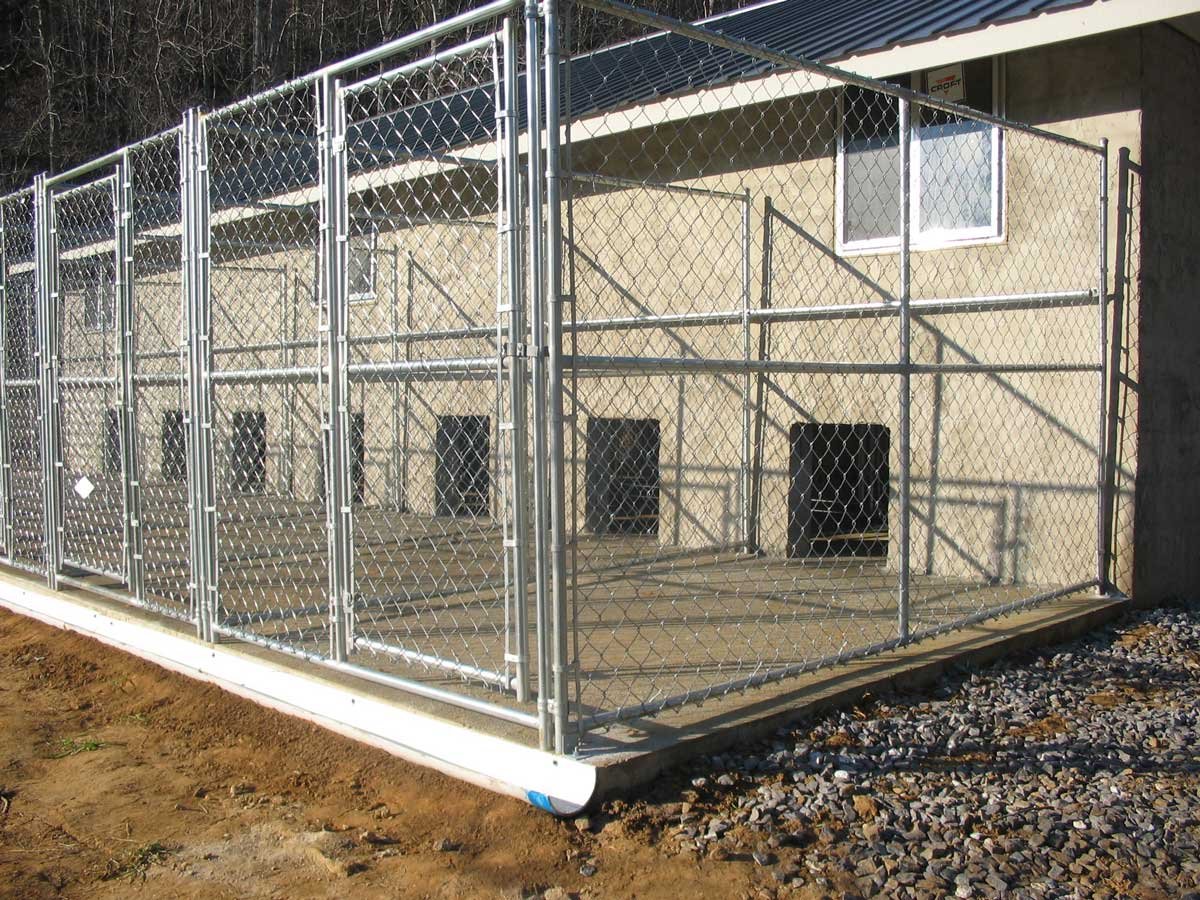
A yard without secure fencing is not a safe yard for a dog. Pets get out through gaps that seem impossibly small. They dig under sections that are not properly reinforced at the ground line. They push through gates that are not latched correctly or that swing the wrong way under pressure.
We work with galvanized chain link and a full range of fencing systems and a full range of fencing systems to install pet containment solutions that actually contain.
Across Asheville and the surrounding communities, we have helped property owners give their dogs the outdoor freedom they need inside the boundaries they require.
Pet Fencing in Asheville, NC: What Separates a Pet Fence from a Standard Fence
Pet Fencing in Asheville, NC requires specific engineering that a standard residential fence does not always address. The gaps in the mesh must be sized appropriately for the breed being contained.
The bottom of the fence must be secured against digging. In most cases, we use a ground-level tension wire attached to the chain link fabric with hog rings. Chain link fabric by itself has natural flex, which can allow determined dogs to push or squeeze underneath. The addition of a bottom tension wire significantly reduces that risk by holding the fabric tight to the ground line.
Dogs are surprisingly motivated escape artists, and a fence that does not account for their specific behaviors will fail. We have installed pet fencing for everything from small terriers to large working dogs, and each installation reflects the particular tendencies and physical capabilities of the breed.
Mesh Size and Fence Height by Breed
A properly specified two-inch mesh is generally effective for containing most dogs, from larger breeds like Great Pyrenees and German Shepherds to smaller breeds such as Yorkies and Jack Russell Terriers.
Fence height, however, can vary depending on a dog’s size, agility, and behavior.
For example, a four-foot fence may be sufficient for a Basset Hound but may not deter a more athletic breed like a Catahoula Leopard Hound.
Beyond mesh size and height, post spacing also plays an important role in overall fence performance, helping maintain stability and effectiveness across the entire enclosure, including gates and transitions to existing boundaries.
We consider all of these factors when planning a fence, ensuring it meets the specific needs of each property and pet.
Anti-Dig Solutions That Hold
Digging is one of the most common escape methods for dogs. We can address this with a buried hardware cloth apron that extends outward from the base of the fence, angled away from the yard, when a property or pet requires that level of reinforcement.
When a dog begins to dig at the base, it hits the buried barrier before clearing enough ground to squeeze through. That system works without chemicals, electronic devices, or ongoing intervention from the owner.
Asheville Dog Fence Barrier: Designing for the Property and the Pet
An Asheville Dog Fence Barrier has to work with the terrain. Asheville lots are not flat. Slopes, drainage channels, natural rock outcroppings, and mature tree roots all create complications for a fence that needs to maintain contact with the ground across its entire run.
We address each of those challenges individually. On sloped sections, we rack the fence panels to follow the grade and fill gaps at the base with additional material or gravel boards.
Around tree roots, we adjust post placement to work with the existing root structure rather than against it. The goal is a continuous barrier without gaps, regardless of what the terrain presents.
Pet Fence Installation in Asheville, NC: The Process We Follow
Pet Fence Installation in Asheville, NC, begins with a site walk where we map the property line, identify terrain challenges, and discuss the specific containment needs of the dogs. From that assessment, we produce a layout plan that covers fence material, post placement, gate size and location, and any reinforcements needed at the ground line.
We do not start digging until the client has reviewed and approved the plan. Changes made after installation begins are expensive and time-consuming. Getting the plan right before the first post goes in saves everyone time and money.
Gate Design That Matches the Level of Containment
A fence is only as secure as its weakest gate. Gates that are not properly designed for containment can be pushed open by a determined dog leaning against them if they swing in the same direction as the pressure from the contained side.
Gates that self-close without a positive latch can drift open over time. We design every gate in our pet fencing installations to swing against the direction of pressure from inside the enclosure, close positively, and latch securely.
For properties with young children as well as pets, we add child-safe latch designs that prevent small hands from releasing the gate while still allowing adults easy access from both sides.
Giving Your Dog the Yard They Deserve
A dog that can run, play, and explore freely in a secure yard is happier and healthier. The fence that makes that possible is not a luxury for the pet. It is a responsibility of the owner, and we take that responsibility seriously in every installation we complete.
Call us to schedule a pet fencing consultation and let us design a containment solution built specifically for your property and your animals.