

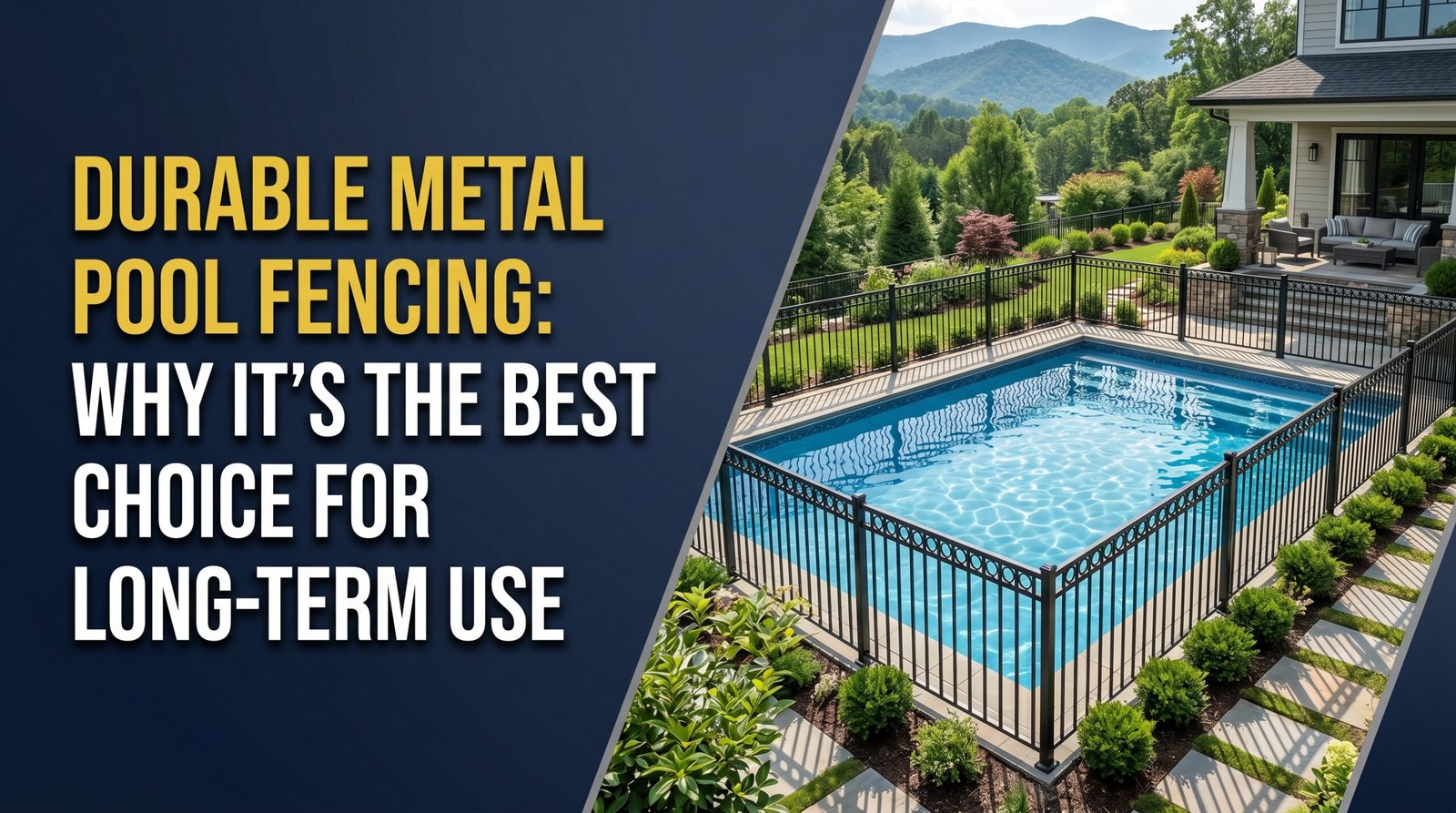
Pool safety is not a preference. It is a legal requirement, and the fence around a pool is the first line of protection against unauthorized access, especially for young children.
A properly installed metal fence around a pool perimeter delivers structural reliability that wood and vinyl simply cannot match in a consistently wet environment.
Metal resists the moisture, chemical exposure, and physical pressure that pool environments generate year after year.
The question is not whether to fence a pool but which fencing system holds up well enough to keep that protection intact through decades of use.
Why Metal Pool Fencing Lasts Longer
Resistance to Moisture and Rust
Pool environments expose fencing to constant moisture, chlorine drift, and humid air that degrade materials faster than standard outdoor conditions. Quality metal pool fencing uses galvanized or powder-coated finishes that resist surface corrosion under these conditions. Aluminum does not rust at all, making it a strong option for pool enclosures where the finish must stay intact without annual recoating.
Better Visibility Around Pools
Metal pool fencing maintains open sight lines that wood and solid vinyl panels block entirely. Visibility around a pool perimeter is a safety feature. Adults supervising swimmers need unobstructed views from multiple angles. Chain link and tubular aluminum both allow full sightlines while maintaining the physical barrier required by the safety code.
Lower Maintenance Requirements
Metal pool fencing eliminates most of the maintenance that wood and vinyl require near water. There is no sealing schedule, no paint to chip, and no swelling or warping through wet and dry cycles. Periodic cleaning and hardware inspection are the primary maintenance tasks, and both take far less time and cost than the upkeep that other materials demand in the same environment.
• Structural strength holds through the physical contact and lean pressure that pool areas generate from daily use
• Metal fencing maintains a cleaner appearance through chlorine exposure and humidity without visibly degrading.
• Reduced repairs mean fewer service calls and lower long-term ownership costs compared to wood or vinyl
• Long-term value makes metal the most cost-effective pool fencing choice when evaluated across a ten-year service window
Pool Fence Requirements NC Homeowners Must Follow
Fence Height Standards
Pool fence requirements in NC specify that pool enclosures must reach a minimum height that prevents young children from climbing over without assistance. The current standard requires fencing that meets or exceeds 48 inches in height on the exterior face. The fence must be constructed so that it does not provide footholds or handholds that a child could use to climb.
Self-Closing Gate Requirements
NC pool safety regulations require that gates in pool enclosures be self-closing and self-latching. The latch mechanism must be positioned on the pool side of the gate and out of reach of a young child, typically at least 54 inches above ground or secured behind a barrier. Gates must swing away from the pool so that a child pushing against the gate from the outside cannot open it toward the water.
Safety Compliance Matters
Pool fence requirements in NC are enforced at the point of installation and can be reviewed at any time during a property inspection or insurance assessment. Non-compliant fencing creates liability exposure for the property owner and may affect coverage under homeowner insurance policies. Working with a contractor who understands the specific code requirements eliminates the risk of an installation that fails compliance review.
Installation Mistakes That Reduce Pool Safety
Weak Anchoring
Pool fence posts set in shallow or poorly mixed concrete shift under the lateral pressure of someone leaning or pushing against the fence. A post that moves creates gaps at the base and compromises the structural rigidity of adjacent fence sections. Pool enclosures require post depth and concrete specifications that hold the fence rigid under direct physical pressure, not just passive wind load.
Poor Gate Placement
Gate placement in a pool enclosure requires deliberate planning around the approach path, the swing direction, and the sight line from the primary supervision point. A gate positioned where it is not visible from the pool deck or from inside the home removes the passive supervision advantage that a well-designed enclosure provides. Gates must also be positioned so that their swing arc does not create a gap that a child could pass through during the opening cycle.
Incorrect Material Choices
Wood fencing near a pool absorbs chemical-laden moisture and deteriorates faster than in standard outdoor applications. Vinyl can crack under the repeated physical stress common in pool environments.
Neither provides the structural consistency that metal maintains over the same service period. Choosing the right material for a pool enclosure is not just a durability decision. It directly affects how long the safety barrier performs as intended.
A pool fence that fails is not a maintenance problem. It is a safety failure. The materials, the installation depth, the gate hardware, and the compliance with NC pool fencing requirements all determine whether the enclosure holds its protective function through years of use.
Asheville Chain Link & Fencing Service installs pool fencing that meets code requirements and stands up to everything a pool environment delivers.