
The cost of fence construction and repair in Asheville is a question every property owner eventually asks, and the answer depends almost entirely on who is doing the work.
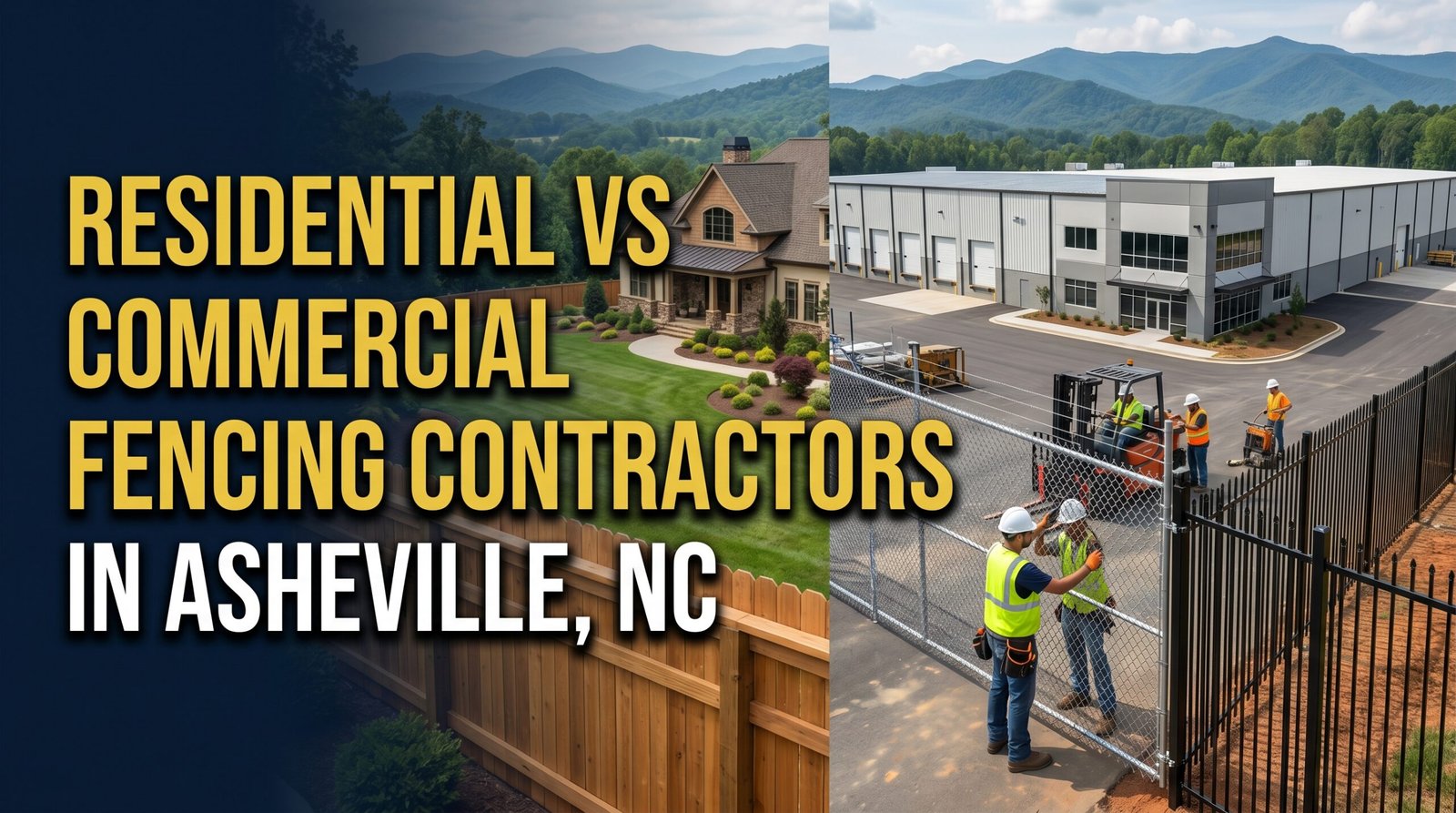
Not every fencing contractor approaches residential and commercial projects with equal competence. The demands differ significantly between the two, and a contractor built for one category can struggle with the other.
Understanding those differences helps property owners select the right professional and avoid paying to fix work that was never suited to their property in the first place.
Two Different Jobs That Happen to Use the Same Tools
What Residential Projects Actually Require
Residential fencing centers on containment, privacy, and visual appeal within a relatively defined scope. Post spacing, material selection, and gate placement all respond to the specific layout of the home and yard. HOA guidelines, municipal setback rules, and neighbor considerations factor into every residential installation in ways that commercial work rarely demands.
What Commercial Projects Actually Require
Commercial fencing operates under stricter load and security requirements. Perimeter systems for commercial properties handle vehicle contact, attempted forced entry, and constant daily use that residential fencing never faces. Post gauges, concrete footing depth, and hardware ratings scale up accordingly. A contractor without commercial experience will frequently underspecify the installation and produce a system that fails ahead of schedule.
Why the Contractor Match Matters
Fencing contractors in Asheville, NC who work across both residential and commercial categories bring a broader technical range to each project. They recognize when a residential gate needs commercial-grade hardware because of heavy daily use, and when a commercial perimeter can use residential-specification sections without compromising security. That judgment comes only from consistent field experience across both project types.
How Fence Installation Costs are Calculated
What Drives the Cost Up
The cost of fence and installation rises with terrain complexity, material grade, and the scope of site preparation required. Sloped yards need stepped or racked sections that require more labor and precise measurement. Rocky soil demands additional equipment for post hole excavation. Longer perimeters with multiple gate openings multiply the hardware and labor costs at every decision point.
Where Cheap Bids Create Expensive Outcomes
Low bids frequently reflect missing steps rather than genuine efficiency. Shallow post holes, undersized concrete, and inferior hardware grade are the most common shortcuts that appear in budget installations. These decisions reduce the upfront cost while shifting the financial risk to the property owner, who absorbs the repair and replacement expenses within the first few years.
Getting Real Value From Professional Fencing Contractors
Fencing contractors in Asheville, NC who deliver lasting results build their pricing around the work the project actually requires. Accurate material quantities, proper site preparation, correctly specified hardware, and appropriate post depth for the soil and frost conditions all factor into an honest estimate. Property owners who evaluate bids on these criteria spend less over the lifespan of the fence, even when the initial price is higher.
Reading the Site Before the First Post Goes In
Soil and Drainage Assessment
Soil composition directly affects how long a fence post holds its position. Clay-heavy soil retains moisture and creates freeze-thaw pressure against post bases. Sandy or loose soil requires deeper posts and wider concrete collars to resist lateral movement. Drainage assessment identifies low points where water accumulates and corrodes hardware or saturates wood before the surrounding yard shows any sign of moisture problems.
Slope and Grade Challenges
Sloped properties in Asheville present installation challenges that contractors experienced on flat ground are often unprepared for. Stepped fence sections maintain consistent post depth across grade changes but require precise measurement between each drop to avoid visible height inconsistencies.
Racked sections follow the slope continuously but require flexible panel materials and careful tensioning to prevent sag along the lower edge.
Planning Access Points Correctly
Gate placement and swing direction require more planning than most property owners anticipate. A gate that swings inward on a sloped approach will drag against the ground within the first season. Wide gate openings for vehicle access require double posts and reinforced frames that handle the weight and lever force of large swinging panels. Planning these access points during the site review prevents structural failures that become obvious only after installation is complete.
Residential and commercial fencing are different disciplines, and the cost of getting that distinction wrong falls entirely on the property owner. Good contractors ask the right questions before pricing the job and build installations that hold up under the actual conditions of the property.
Asheville Chain Link & Fencing Service brings that level of technical accountability to every project, from single residential gates to full commercial perimeter systems.