

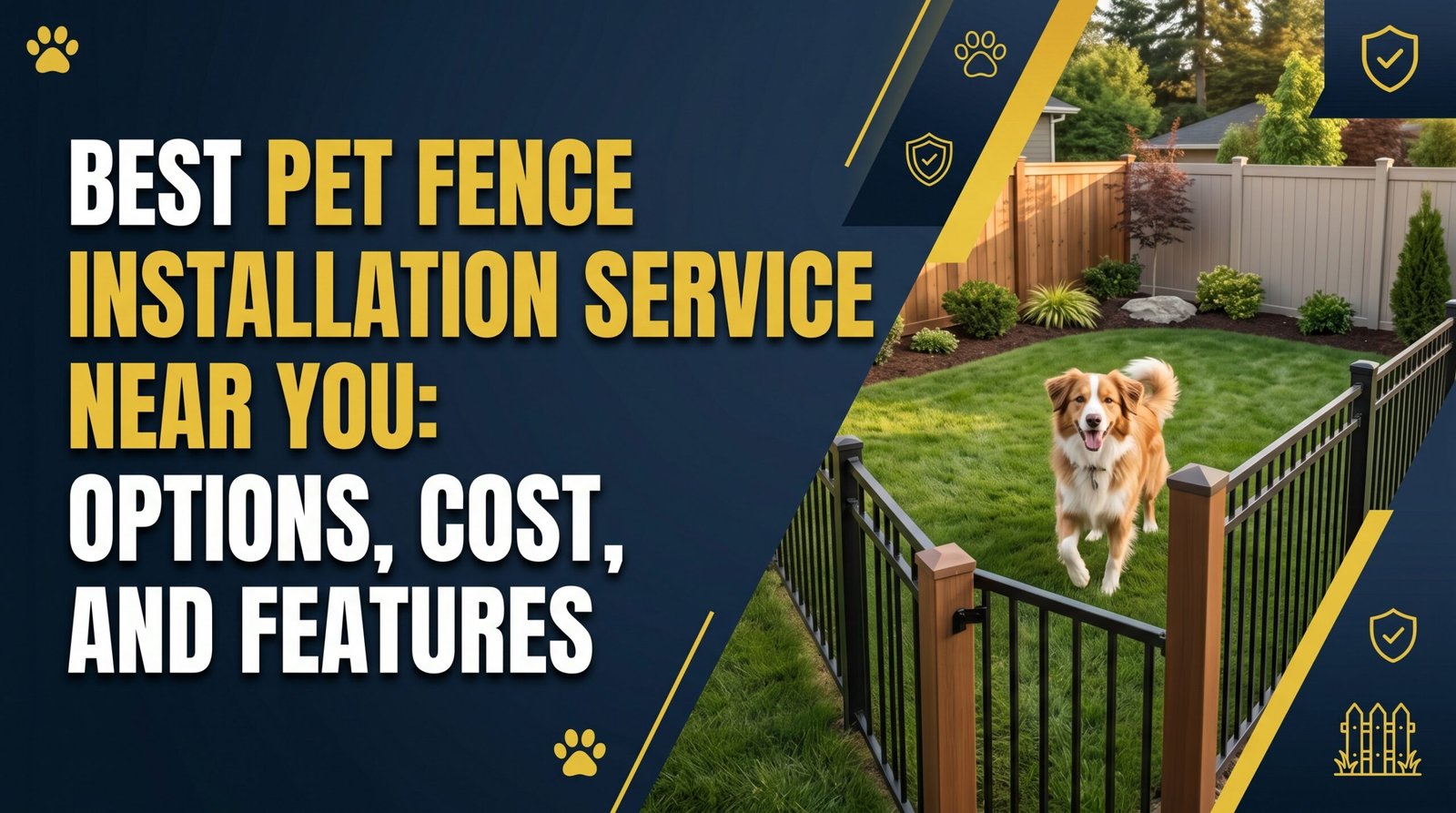
Pet owners who have experienced the panic of a missing dog understand that fencing is not optional. Dog fences in Asheville vary considerably in design, material, and installation quality, and those differences determine whether a pet stays safely contained or finds the gap in an afternoon.
The most common failure points are not obvious at first glance. They appear at ground level, at gate hardware, and in the mesh sizing that looks adequate until a determined terrier proves it wrong.
Choosing the right fence for a specific pet requires understanding breed behavior, yard terrain, and the material characteristics that keep containment intact under real conditions.
Choosing the Right Pet Fence Installation Service
Fence Height Depends on the Pet Breed
A fence that contains a Basset Hound will not necessarily contain a Catahoula Leopard Hound. Breed-specific jumping ability, climbing tendency, and determination vary enormously, and fence height must account for the specific animal being contained. We assess the pet breed before specifying fence height so the installation does not create a false sense of security.
Larger athletic breeds require taller fence heights paired with adequate post spacing to prevent the panel flex that a running dog can use to launch over a barrier. Coyote rollers and outward-leaning fence extensions address the specific escape methods that agile breeds use when a standard vertical fence is not sufficient.
Mesh Size and Spacing Matter
A two-inch mesh opening is generally effective for most dog breeds, including larger dogs like Great Pyrenees and German Shepherds as well as smaller breeds like Yorkies and Jack Russell Terriers. The mesh size determines whether a small dog can push its head through and create enough leverage to widen the opening over time.
Post spacing reinforces the mesh’s containment function by preventing the lateral flex that accumulates in a fence under repeated impact. Proper spacing keeps the fabric taut between posts, which is what holds the mesh geometry intact under the sustained pressure that an active dog applies over years of containment.
Gates Should Be Secure and Reliable
Gates that swing inward create an advantage for dogs inside the fence because inward-swinging gates cannot be pushed open from inside. Outward-swinging gates are more vulnerable to a dog that learns to apply pressure at the latch point. We specify gate swing direction based on the pet’s size, behavior, and the containment confidence the owner requires.
Self-closing hinges and gravity latches reduce the risk of human error that leaves a gate unlatched after entry or exit. For high-escape-risk animals, we can add secondary latch mechanisms that require deliberate two-step operation to open, which effectively eliminates accidental releases.
• Visibility through the fence material helps pets feel connected to the wider environment, which reduces the anxiety-driven escape attempts that solid panels often trigger
• Durability in the mesh and hardware ensures the fence performs its containment function through years of active daily use without developing the gaps and sag that invite escape
• Dig prevention through a bottom tension wire secured with hog rings along the full fence base, making it nearly impossible for dogs to squeeze underneath
• Safe access through properly aligned gates with appropriate latch hardware that closes securely without requiring force that could injure a pet
The Average Cost of a Fence Per Foot
Material Choice Changes Pricing
The average cost of a fence per foot varies significantly depending on material selection. Chain link represents the most cost-effective option for large yard containment, with installed costs typically ranging from $15 to $30 per linear foot depending on height and coating. Wood fencing runs higher due to material cost and the labor intensity of the installation process.
Vinyl and aluminum options carry higher upfront costs than chain link but reduce maintenance expenses over the ownership period. The total cost calculation should account for the initial installation, expected maintenance over ten years, and the probability of partial replacement. Material selection that looks economical at installation can become expensive at year five.
Terrain and Layout Affect Labor Costs
Flat rectangular yards represent the simplest and least expensive installation configuration. Sloped terrain requires adjusted post depths, stepped or racked panel sections, and additional labor time to maintain a consistent fence line across grade changes. Rocky soil adds to post installation time and may require alternative anchoring methods.
Yard shape affects total material cost because irregular boundaries require more gate placements, corner posts, and panel cuts that generate waste. We measure carefully before quoting so the estimate reflects actual installation requirements rather than a simple perimeter calculation that ignores these real-world complications.
Repairs and Maintenance Should Be Considered Too
The cheapest fence to install is not always the most economical fence to own. Wood fencing requires periodic sealing or staining to prevent moisture damage, rot, and insect infiltration. Chain link requires minimal maintenance but may need tension adjustments and hardware replacements over a long ownership period.
Planning for maintenance costs at the time of material selection produces more accurate total cost projections. We provide honest assessments of what each material type requires over time so property owners can make decisions based on true ownership cost rather than installation price alone.
Which Fence Type Works Best for Pets?
Chain Link for Durability
Chain link is the most durable containment fencing available for pet owners who need reliable performance across years of active use. The galvanized or vinyl-coated steel mesh resists the repeated impact that dogs apply through running, jumping, and leaning without developing the permanent deformation that other materials accumulate.
The open mesh structure allows pets to see beyond the boundary, which reduces the territorial anxiety that solid fence panels can amplify in certain breeds. Combined with a bottom tension wire at ground level, chain link produces a containment system that handles the full range of dog behaviors without requiring frequent repairs.
Wood for Privacy
Wood fencing serves pet owners who want complete visual separation between the yard and the street or neighboring properties. For dogs that bark and lunge at visual stimuli, solid wood panels reduce the triggering exposure that makes fence behavior worse over time. The privacy benefit addresses the behavioral root of the problem rather than just containing its physical expression.
Wood fence maintenance becomes a practical consideration for pet owners because dogs frequently dig, scratch, and chew at fence bases. Pressure-treated lumber resists moisture and insect damage, but physical abrasion from pet activity requires periodic inspection and repair to maintain the containment integrity of the lower fence sections.
Aluminum for Clean Appearance
Aluminum fencing delivers a polished, low-maintenance containment solution for pet owners in residential settings where aesthetics are a priority alongside function. Powder-coated finishes resist corrosion and surface damage without requiring ongoing treatment. The material holds its appearance through years of exposure without fading, rusting, or splintering.
Picket spacing in aluminum fence systems must be verified against the size of the specific pet being contained. Narrow spacing prevents small breeds from pushing through while maintaining the open aesthetic that makes aluminum an attractive choice for front yard and visible side yard applications.
Pet containment fencing requires more precision than a standard property boundary installation because the stakes of a failure are immediate and personal. The right material, the right mesh size, and the right gate hardware combine to create a system that works without requiring daily concern.
Asheville Chain Link & Fencing Service builds pet fences that hold.