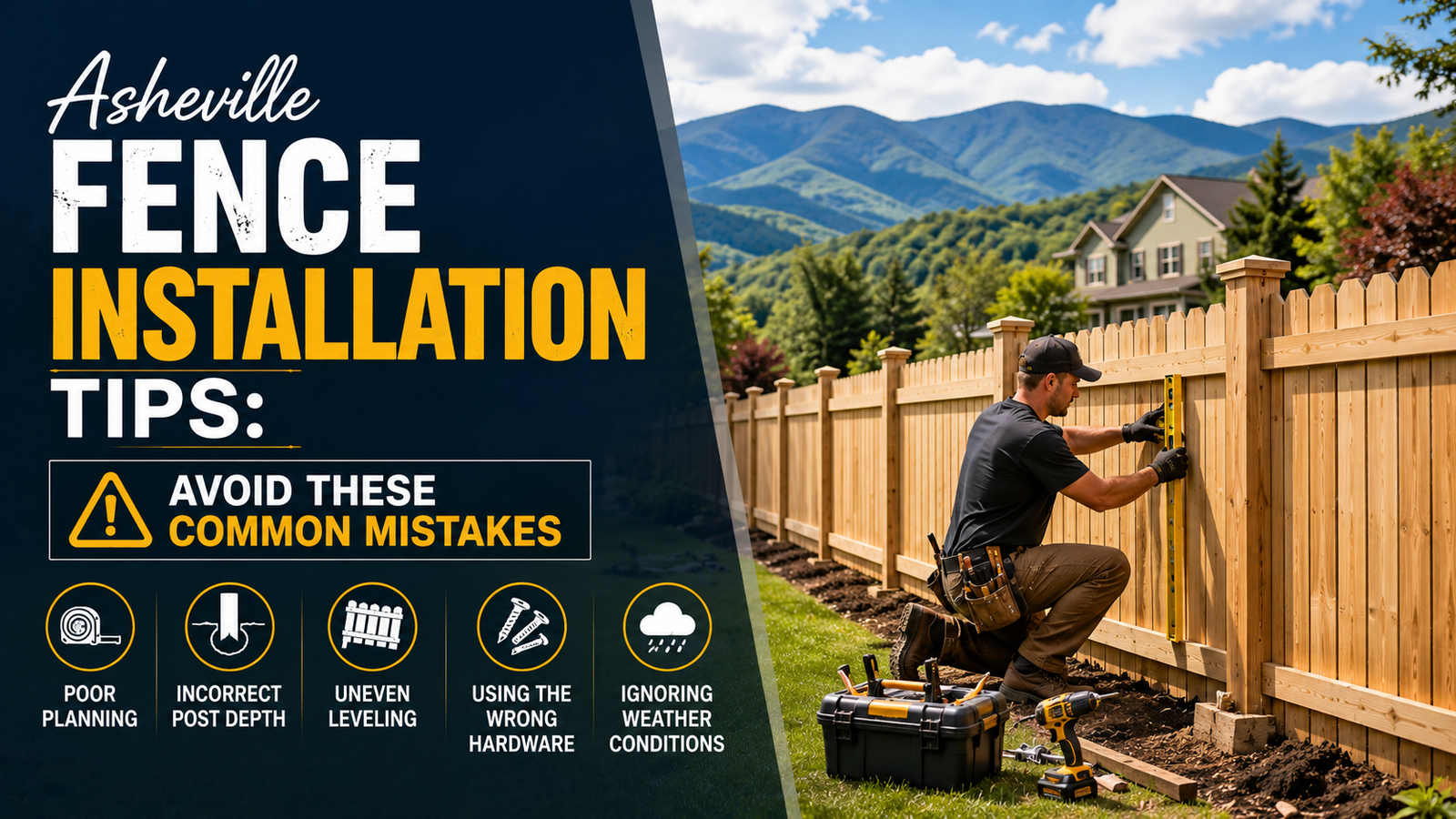
Residential fencing in Asheville is not a simple weekend project, and the evidence often appears in costly repairs down the road.
Property owners often discover months after installation that something was missed: a post set too shallow, a gate frame that never sat level, or a section that fights the slope of the yard instead of following it.
These mistakes, though small initially, grow into larger problems that can affect structural integrity. As a result, your fence may require full replacement sooner than expected.
Getting installation right demands planning, precision, and a clear understanding of the property before a single tool touches the ground.
The Most Common Fence Installation Errors
Ignoring Property Lines
Placing a fence without confirming property boundaries is a recurring and costly mistake. A fence installed even a few inches over the legal property line can create issues with neighbors, and disputes may result in mandatory removal. Reinstallation, along with removal costs, comes at the owner’s expense. Professional installers review plat maps and, when necessary, recommend a survey before marking post locations.
Poor Material Selection
Choosing materials based on price alone leads to premature failure. Wood that is not rated for ground contact rots from the base up. Lightweight chain link fabric stretches under moderate pressure. Vinyl panels installed without a proper expansion allowance crack in cold winters. Material selection needs to match the specific demands of the property and the local climate, not just the initial budget.
Incorrect Fence Height and Layout
A fence built too low fails to provide the privacy or security for which it was installed. However, a fence built too high may violate local or county ordinances and building codes.
Determining the proper height requires balancing functionality, appearance, and regulatory requirements.
In many cases, a fence that is just high enough to meet the property’s needs is the best solution.
What a Fence Company Asheville Homeowners Trust Does Differently
Proper Site Evaluation
A fence company Asheville homeowners rely on treats site evaluation as a non-negotiable first step. Soil testing helps identify soil composition and drainage behavior, both of which determine post depth requirements and long-term fence stability. Existing utilities, grade changes, and site drainage patterns also influence the installation plan. Skipping this review is how structural problems get baked into a fence from the very beginning.
Stable Post Installation
Post stability determines the fence’s overall stability. Posts set at the correct depth for the soil type and local frost line resist movement through freeze-thaw cycles and sustained wind pressure. Concrete must be poured and cured properly before any tension is applied to the fence fabric or panels. Rushing this stage compromises every component connected to those posts.
Gate Alignment That Prevents Sagging
Gates fail faster than any other fence component when they are not installed with precision. A frame that is not perfectly square begins to sag under its own weight over time. Hinges carry constant concentrated stress and require proper placement to distribute the load evenly across the gate structure.
Professional installation ensures gate posts are set deeper and secured with more concrete than standard line posts because they bear significantly more mechanical stress.
• Soil testing identifies soil composition and drainage behavior, helping determine the appropriate post depth and installation method.
• Drainage review prevents water accumulation that corrodes metal hardware and decays wood bases
• Accurate spacing maintains consistent tension across the fence line and ensures even load distribution throughout the fence system.
Asheville Fence Installation Requires More Than Basic Tools
Terrain Challenges in Asheville
Asheville fence installation happens across properties that rarely offer flat, cooperative ground. Sloped yards, rocky soil, and tree root interference all complicate what looks straightforward on paper. Stepped installations, racked panels, and custom post placements are often necessary to achieve a fence that sits correctly and performs structurally over time.
Why DIY Projects Often Fail
DIY fence installation frequently underestimates the technical demands of the work. Post holes dug without proper depth gauges, concrete mixed incorrectly, and hardware installed with inadequate torque all contribute to fences that begin failing within the first year. The tools matter, but so does the experience of using them correctly under real field conditions.
Long-Term Savings From Professional Work
Professional installation costs more upfront, but the math shifts quickly when repair costs are factored in. A properly installed fence requires fewer interventions over its lifespan, maintains its structural integrity through seasonal stress, and holds its appearance longer. Property owners who invest in correct installation from the start spend far less over the life of the fence than those who pay to fix avoidable mistakes.
Fence installation errors are not random. They follow predictable patterns rooted in skipped steps, wrong materials, and underestimated terrain. Avoiding them requires planning, proper tools, and the kind of site-specific expertise that comes from real field experience.
Asheville Chain Link & Fencing Service brings that precision to every installation because a fence built correctly the first time is the only kind worth building.