Fence construction in Asheville looks different depending on who the fence is built for. Residential and commercial fencing share the same basic materials but operate under different standards, different load demands, and different regulatory requirements.
Choosing a contractor who specializes in one without understanding the other creates gaps that show up quickly in performance and compliance.
The right contractor brings not just installation skill but the specific experience to match system design to the demands of each property type.
Residential and Commercial Fencing Have Different Goals
Residential Security and Appearance
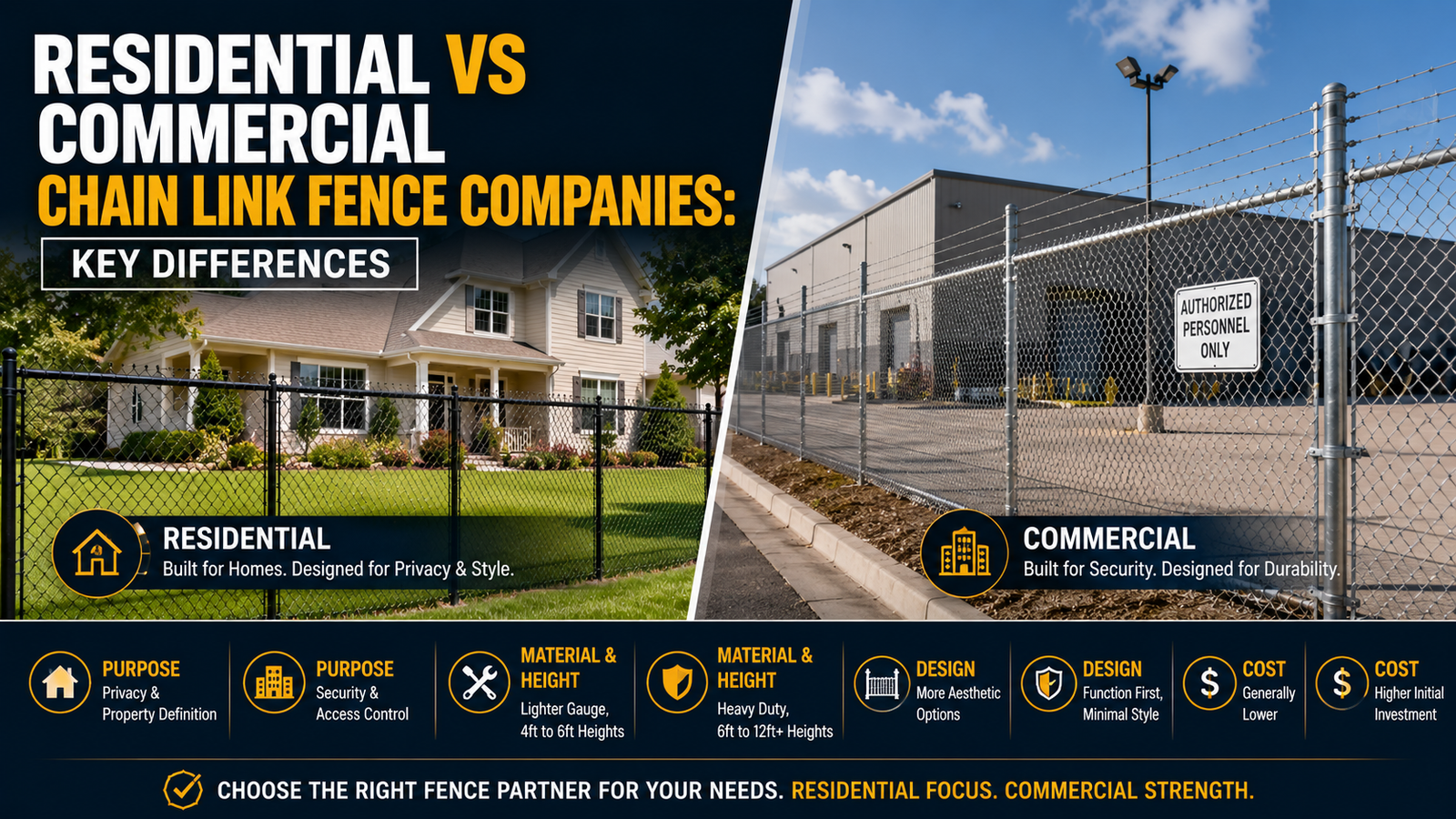
Residential fencing serves privacy, containment, and curb appeal as its primary functions. Post spacing, fabric gauge, and finish options are selected to balance performance with neighborhood aesthetics. A residential fence needs to hold up through daily use while maintaining an appearance that fits the property and complies with local HOA or municipal standards.
Commercial Perimeter Protection
Commercial fencing prioritizes perimeter security, access control, and structural durability under sustained stress. Higher fabric gauges, heavier post schedules, and reinforced gate hardware are standard requirements. Industrial and commercial applications often include barbed wire extensions, privacy slats, or electronic access integration that residential fencing does not require.
Material Strength Differences
The specifications used by commercial chain link fence companies differ meaningfully from residential standards. Heavier gauge wire, larger diameter posts, and deeper concrete footings are necessary when a fence faces vehicle traffic, forced entry attempts, or constant physical contact. Using residential-grade materials in a commercial application shortens the service life and creates liability exposure for the property owner.
What Professional Chain Link Fence Companies Handle Better
Accurate Fence Planning
Professional chain link fence companies begin with a site review that maps grade changes, soil conditions, access points, and utility corridors. This planning phase determines post placement, gate swing direction, and fabric tension strategy before any installation begins. Skipping this step produces fences that fight the terrain rather than conforming to it.
Structural Stability
Structural stability in chain link fencing depends on several interdependent factors. Post depth must clear the frost line to prevent heaving through winter cycles. Tension wire at the base of the fabric, secured with hog rings, prevents animals and people from squeezing underneath, which the fabric alone cannot reliably stop. Proper brace assembly at corners and gate posts distributes lateral load and prevents the line from pulling out of alignment over time.
Gate and Access Solutions
Gates represent the most mechanically stressed component of any fence system. Professional contractors set gate posts deeper than line posts and use heavier concrete footings to manage the leverage load of a swinging frame.
Gate frames are built square, and hardware is installed at the rated load capacity to prevent sagging and binding over the years of daily operation.
• Proper tension across the fabric prevents stretching that leads to sag and perimeter gaps
• Drainage planning around post bases eliminates the moisture accumulation that accelerates corrosion
• Terrain adjustments ensure post depth and fabric height remain consistent across sloped and uneven ground
• Reinforced posts at corners and gate locations distribute concentrated loads without transferring stress to line posts
Asheville Aluminum Fence Options vs Chain Link Systems
Decorative Benefits of Aluminum
Asheville aluminum fence systems suit properties where boundary definition and visual appeal carry equal weight. The material does not rust, holds a powder-coated finish for years without repainting, and delivers a clean, architectural look that chain link does not offer. Aluminum works well for pool enclosures, front yard boundaries, and commercial properties where appearance supports the brand or property value.
Practical Strength of Chain Link
Chain link outperforms aluminum where raw structural strength and impact resistance are the priorities. It handles perimeter security for large commercial sites, industrial facilities, and high-traffic applications where ornamental fencing would fail under sustained pressure. The installation cost is lower, the maintenance demands are minimal, and the system scales efficiently across large perimeters without compromising structural integrity.
Choosing the Right Fit for the Property
The decision between aluminum and chain link comes down to what the fence needs to accomplish. Properties that require a visible security deterrent with a finished appearance benefit from aluminum. Properties that need maximum perimeter coverage, physical strength, and cost efficiency benefit from chain link. A contractor who works with both systems can assess the property and recommend the right solution without bias toward either product.
Residential and commercial fencing demand different expertise, different materials, and different installation standards. Treating them as interchangeable produces results that fall short of what either property type actually requires. The right contractor brings the knowledge to distinguish between them and the skill to execute both correctly.
Asheville Chain Link & Fencing Service works across both categories with the same commitment to structural precision and long-term performance.