

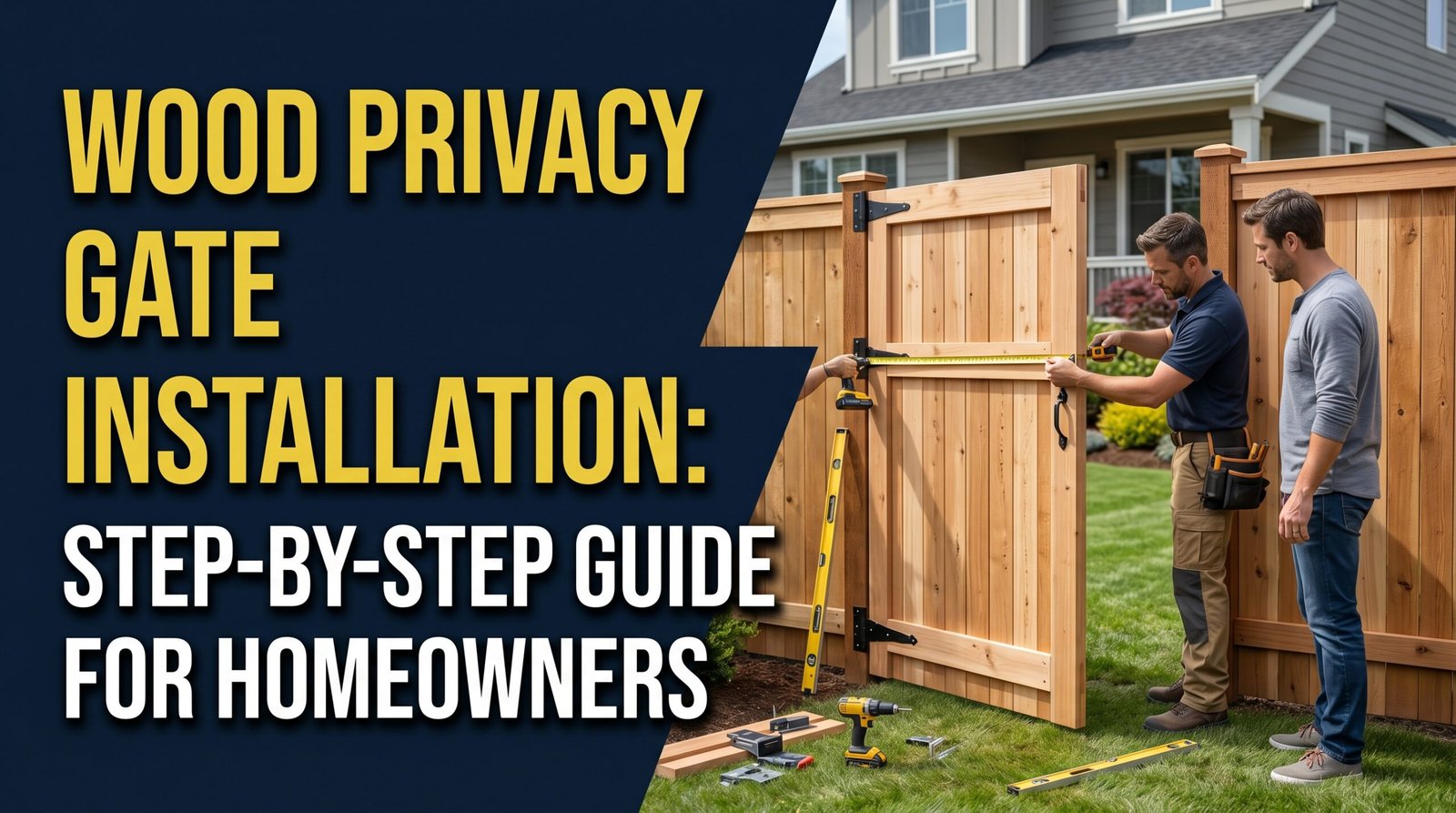
Wood fence installation in Asheville, NC, is rarely the part of a fencing project that fails first. The gate is. Gates carry mechanical stress that the fence itself never faces: repeated swinging, constant latch engagement, and the cumulative weight of a frame that fights gravity every time it moves.
When a gate is built without the structural precision it requires, it starts showing problems within the first season. Sagging, binding, and misalignment are not signs of bad wood.
They are signs of a gate that was not built with the right hardware, the right post depth, or the right structural support from the beginning.
Building a Wood Privacy Gate That Lasts
Choosing the Right Wood
Gate construction starts with selecting lumber that handles ground-proximity moisture and structural stress simultaneously. Cedar and pressure-treated pine are the two most reliable choices for Asheville’s humid climate. Cedar resists moisture and insect damage naturally.
Pressure-treated pine handles ground contact applications well and costs less while still delivering the dimensional stability a gate frame requires. Untreated softwoods in gate construction absorb moisture, swell, and warp through the seasonal cycle, which destroys alignment within one to two years.
Why Strong Hardware Matters
Hardware selection determines whether a gate holds its alignment through years of daily use. Undersized hinges bend under frame weight and allow the gate to drop gradually until it drags on the ground or refuses to latch. Galvanized or stainless steel hardware resists the corrosion that zinc-plated alternatives develop within a single wet season in Asheville.
Proper Measurements Prevent Problems
A gate frame that is not built perfectly square will bind and sag under its own weight over time. Measuring the diagonal dimensions of the frame during assembly confirms that the frame is square before any fasteners are fully set. Expansion allowance between the gate frame and the post must account for wood movement through humidity and temperature changes.
• Hinges sized at a minimum of three per gate panel distribute frame weight evenly and prevent corner stress
• Latches installed at mid-frame height engage correctly only when the gate is plumb and the latch strike is precisely aligned
• Sealants applied to all cut lumber ends before assembly prevent moisture intrusion at the most vulnerable points in the structure
• Diagonal reinforcement bracing from the top hinge corner to the bottom latch corner prevents frame racking under its own weight
Asheville Wood Fence Projects Need Smart Planning
Soil and Moisture Challenges
Asheville wood fence projects face soil conditions that vary significantly across even a single property. Areas with high clay content retain moisture against post bases and create freeze-thaw pressure that pushes posts upward over winter. Where possible, gate post holes should extend below the frost line to prevent seasonal heaving that throws gate alignment off and stresses hinge mounts.
Preventing Gate Sagging
Gate sag is the most common complaint following wood gate installation. It develops when gate posts are not set deep enough, when hinges are not positioned to distribute load correctly, or when the gate frame lacks internal diagonal bracing. A turnbuckle cable running from the top hinge corner to the bottom latch corner can be installed at construction and adjusted over time as minor settling occurs.
Why Post Depth Matters
Gate posts carry far more mechanical load than line posts and must be set deeper to manage it. A gate post set at the same depth as a standard fence post will rotate under hinge stress within the first season of use. Deeper posts, larger concrete collars, and appropriate post diameter relative to gate width are the three variables that determine whether a gate post holds its position long-term.
Wood Privacy Gate Maintenance Homeowners Often Ignore
Seasonal Inspections
Seasonal inspection of a wood gate takes less than fifteen minutes and prevents the kind of compounding failures that require complete replacement. Checking hinge tightness, latch alignment, and frame squareness at the start of each spring and fall catches small shifts before they become structural problems. Tightening loose hardware costs nothing. Replacing a gate post that has rotated out of plumb costs significantly more.
Sealing and Staining
Wood gates in Asheville need sealing every one to two years, depending on sun exposure and moisture contact. Sealant prevents moisture absorption that causes swelling, warping, and eventual rot. Stain adds UV protection alongside moisture resistance and extends the interval between sealing applications. Both should be applied to all surfaces of the frame, including the bottom rail, which sits closest to ground moisture.
Small Repairs That Prevent Bigger Damage
A loose hinge screw addressed in the first month costs nothing. Left for a season, that loose screw enlarges the mounting hole until the hinge pulls through the wood and the gate drops. Split boards along the frame face allow moisture into the core of the lumber. Sealing splits with exterior wood filler and sealant stops the progression before the board requires full replacement.
A wood privacy gate built correctly is a durable, functional part of the property for many years. Built incorrectly, it becomes the first repair call of the season, every season. The difference comes down to structural planning, quality hardware, and maintenance that addresses small problems before they grow.
Asheville Chain Link & Fencing Service builds and repairs wood gates with the precision that makes the difference between a gate that holds and one that fails.